MOBILITY UNBOUND
Imagine a society where everyone is free to move safely and with self-determination; where everyone flourishes socially, culturally and economically, unrestricted by structural barriers within transportation systems.
Achieving this vision of mobility unbound requires a collaborative approach that is grounded in principles of mobility justice. This framework begins with an understanding of the ways that transportation infrastructure and practices have historically excluded or harmed groups of people, particularly communities of color, in order to heal the harms of the past and build transportation systems that work for all.
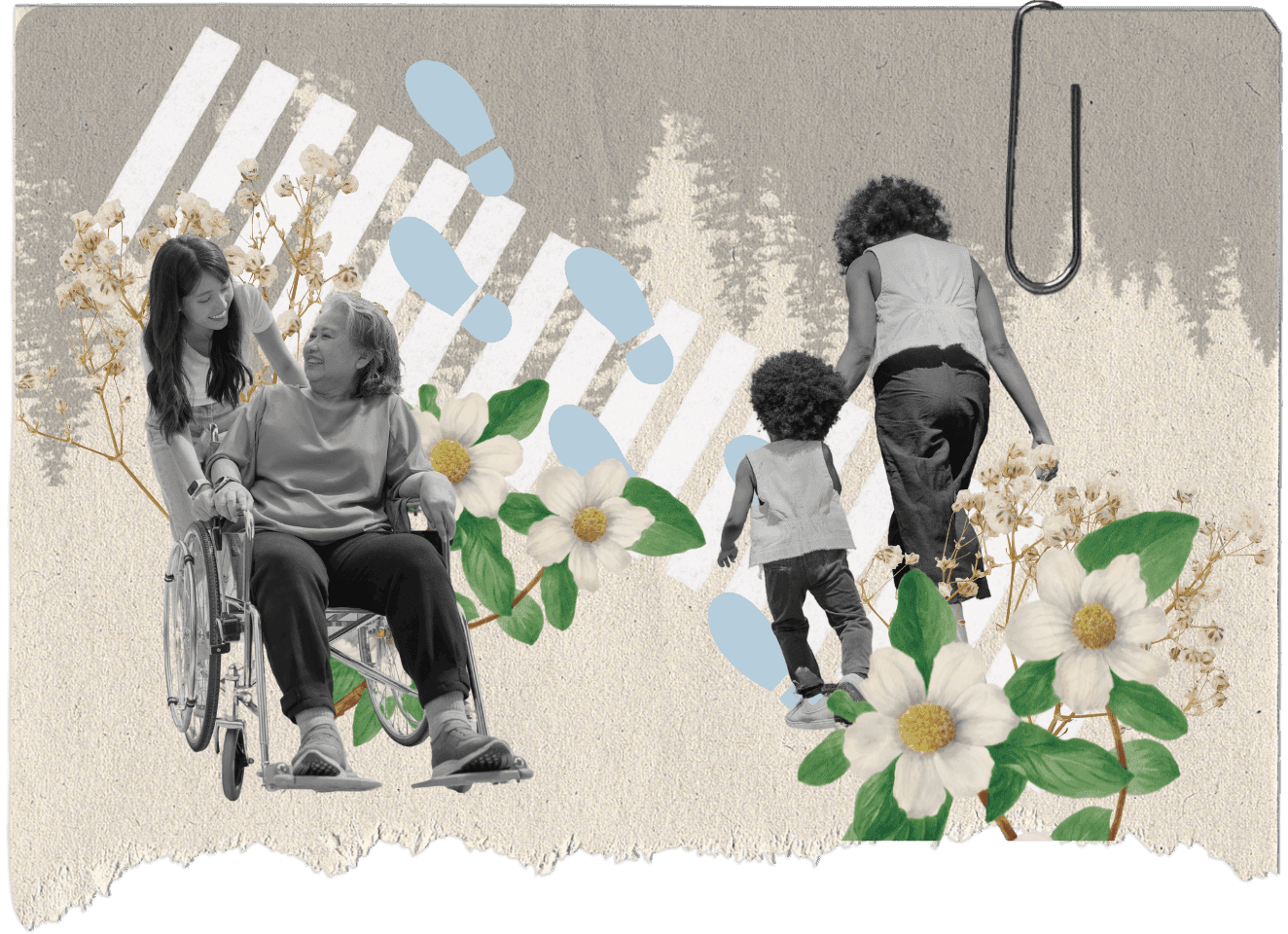

Building systems that work for everyone requires that we acknowledge the unjust histories of mobility and economic prosperity in American cities.
A mobility justice approach to transportation planning includes facilitating dialogue, funding the participation of people and community organizations who are directly affected, and establishing partnerships that lead to the shared decision-making that is necessary for meaningful repair.
By taking a mobility justice approach, government agencies and elected officials can advance transportation policies, programs, and projects that bring community-driven visions to life.
Connecting the Maker’s District Across the Delmar Divide
The Community Connectors project in St. Louis, MO, focused on bringing together nine neighborhoods along the Delmar Divide by fostering community involvement and creating a comprehensive, unified plan.


The
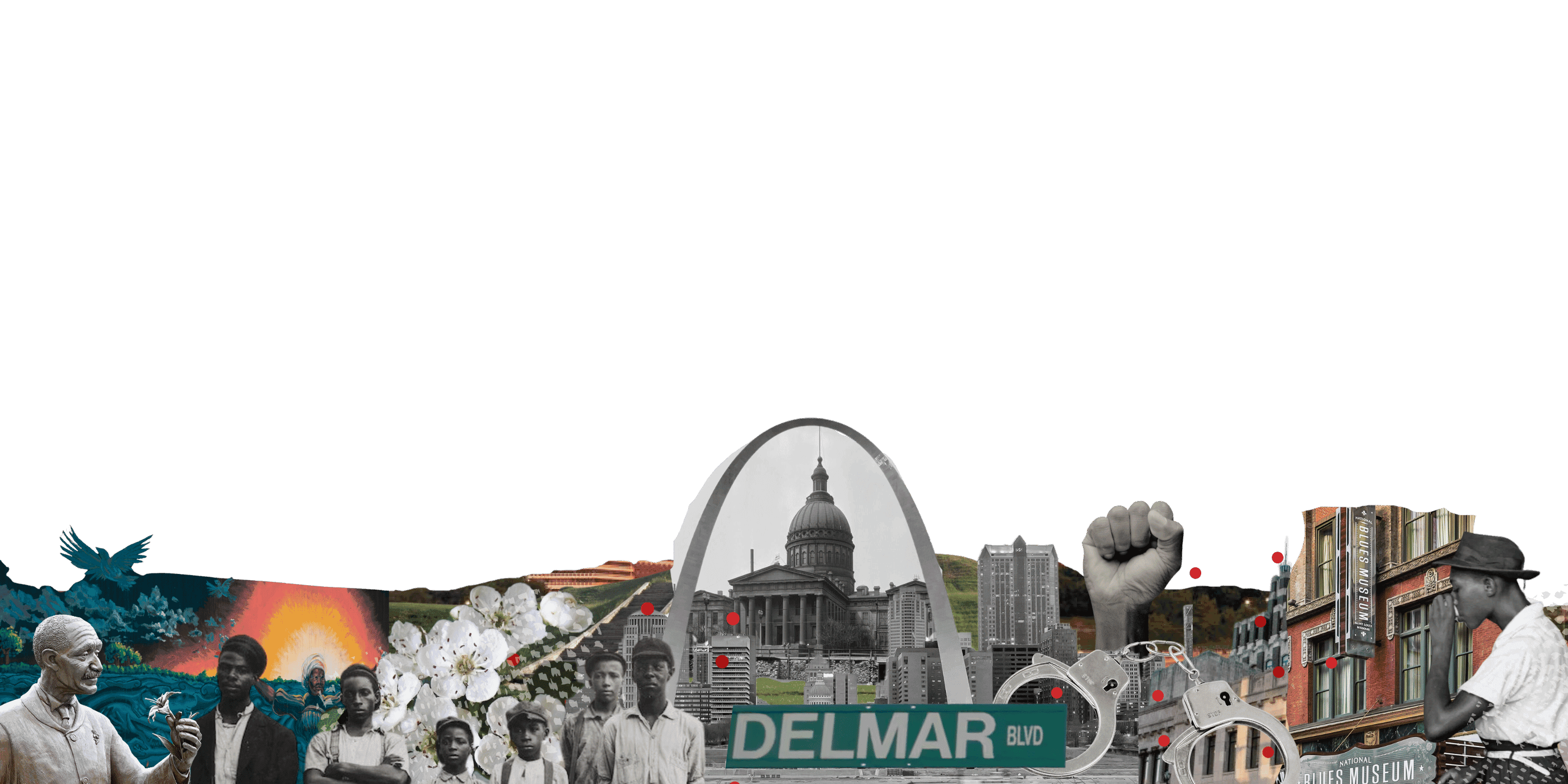
Jim Crow laws, redlining, traffic flow projects, and the destruction of historically Black neighborhoods in the name of urban renewal led to the displacement of Black residents from the Mill Creek neighborhood to the area north of Delmar Boulevard. Today St. Louis remains one of the most segregated and violent cities in the US, especially along the Delmar Divide [1]. The area north of Delmar has a rich history of Black arts and culture yet is now known as a book desert with poor literacy rates, poor to no tree canopy which causes heat island issues as well as poor air quality, and high rates of respiratory, heat related, and mosquito-borne illnesses.
However, amidst these challenges, there's a growing movement focused on reparations and restoration. While the area north of Delmar has suffered from disinvestment, the areas immediately to the east (Grand Center Arts District) and the west (The Loop) are vibrant arts and business districts. In the center of the Delmar neighborhoods, investors are creating the Maker’s District, another strong arts and culture business area. An additional mixed-use development to the west of Delmar, the Delmar Divine, has created businesses and residences in tune with the needs of the neighborhoods. This juxtaposition highlights the stark contrast across the Delmar Divide while also showcasing the potential for positive change.
The
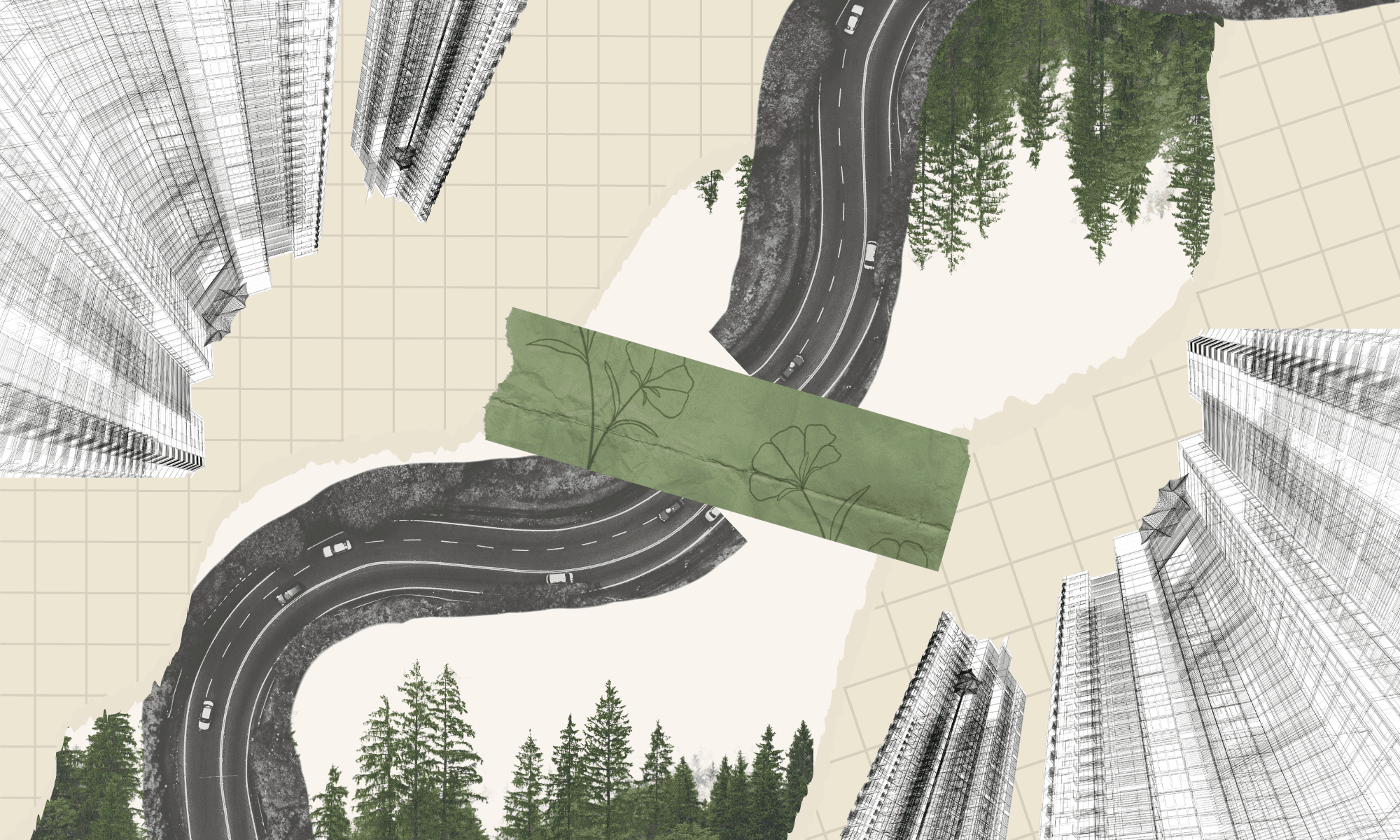
Historically Black neighborhoods were targeted by urban developers to lay the foundations for highways that would serve as high speed connections to St. Louis’ downtown core, ferrying workers in and out of the city. While wealthier, white commuters were able to utilize these new highways to speed into downtown St. Louis from suburban areas, Black communities were bisected, disconnected, and destroyed.
More affluent Black residents moved to the area North of Delmar while less affluent Black residents moved to dense high rise housing units that were segregated from other parts of the city. Meacham Park, The Ville, and Delmar Avenue along the Kingshighway corridor are a poignant example of the systematic denial of black prosperity as these neighborhoods were destroyed with the use of eminent domain to make way for these urban projects that cut Black families off from economic opportunities. The effects of these urban renewal projects are still seen today as these once prosperous neighborhoods have fallen into derelict disrepair and are in desperate need of careful, thoughtful investment.
The

The Community Connectors project committed to bridging the Delmar Divide and fostering a unified vision for the future. By prioritizing community engagement, the project sought to reconnect the nine neighborhoods along this historic corridor.
The project included convening residents and community leaders to discuss their aspirations for the corridor and identify areas where support is needed, developing design proposals based on community input, and ensuring accountability through comprehensive evaluation plans focused on determining whether project objectives are met to the satisfaction of residents.
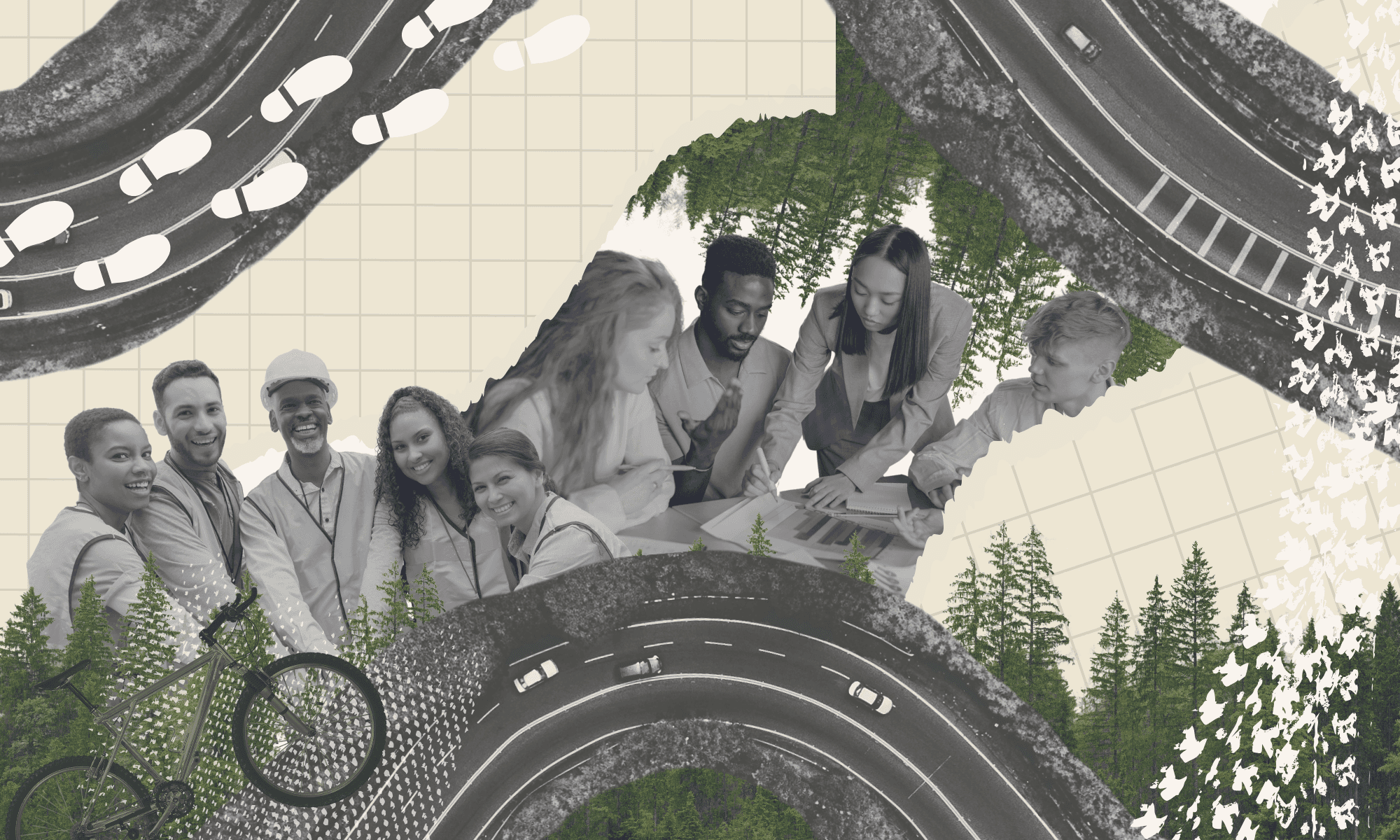
This collaborative approach empowered the community to shape the future of the Delmar corridor, fostering a sense of ownership and ensuring that any interventions truly address the needs and desires of those most affected by the divide. With community leadership, the Delmar residential area is undergoing significant housing rehabilitation as well as new construction on both sides of the street. Efforts to enhance the environment include the planting of trees to create a green canopy, the installation of public trash receptacles at bus stops, and regular litter collection and disposal -all coordinated by residents.
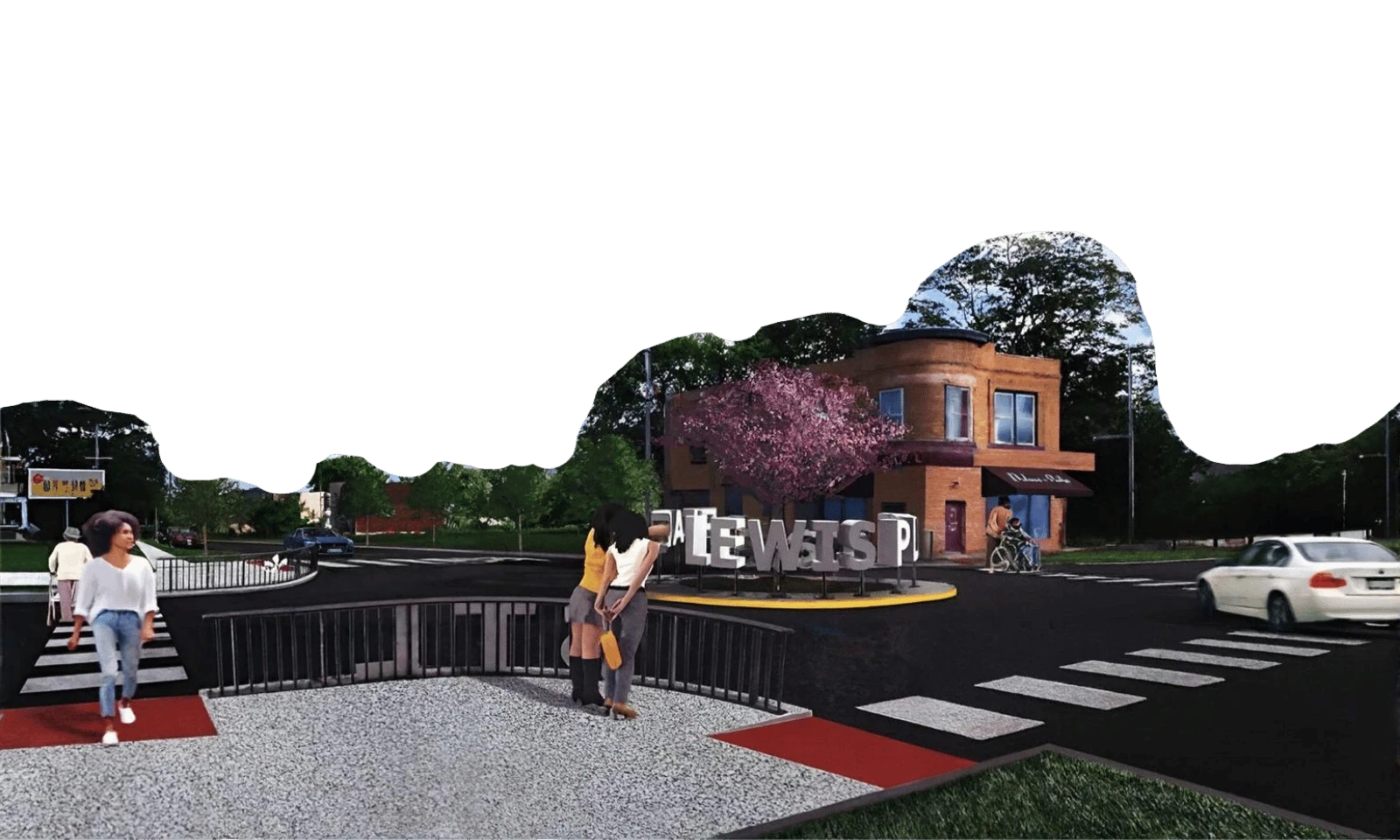
During a demonstration of the roundabout, residents watched as traffic speeds were measured and data was gathered before and during the event. By working together, the community gained the ability to influence the development of the Delmar corridor. This not only built a feeling of ownership but also helped make sure that any changes meet the real needs and wishes of the people most impacted by the divide. Current economic strategies are demonstrating positive results, with an increasing number of businesses establishing themselves both within and surrounding the project area.
The
Arbolope Studio
Academy Neighborhood Association
Central West End Neighborhood Association
City of St. Louis:
St. Louis Board of Public Service
St. Louis Department of Streets
St. Louis Planning and Design AgencyCrossroads School
Gas Light Square Safety Program
Impact Alliance
Lewis Place / Fountain Park Neighborhood Association
Park Central Redevelopment Association
Traffic Control Company
Traffic Management
Washington University
Ward 9, Alderman Michael Browning
Ward10, Alderwomen Shameen Clark Hubbard
Ward 12, Alderwoman Sharon Tyus
Warning Lights of St. Louis
Vandeventer Community Development Corporation
St. Louis, Missouri
This city's local history offers critical context for the current circumstances and ongoing work to improve community conditions.
The following mobility legacies, organized according to mobility patterns that are prevalent across the United States, point to harmful policies and decisions, and subsequently, opportunities for repair and reconnection. They do not provide an exhaustive history of the city.