

MOBILITY UNBOUND
Imagine a society where everyone is free to move safely and with self-determination; where everyone flourishes socially, culturally and economically, unrestricted by structural barriers within transportation systems.
Achieving this vision of mobility unbound requires a collaborative approach that is grounded in principles of mobility justice. This framework begins with an understanding of the ways that transportation infrastructure and practices have historically excluded or harmed groups of people, particularly communities of color, in order to heal the harms of the past and build transportation systems that work for all.
Building systems that work for everyone requires that we acknowledge the unjust histories of mobility and economic prosperity in American cities.
A mobility justice approach to transportation planning includes facilitating dialogue, funding the participation of people and community organizations who are directly affected, and establishing partnerships that lead to the shared decision-making that is necessary for meaningful repair.
By taking a mobility justice approach, government agencies and elected officials can advance transportation policies, programs, and projects that bring community-driven visions to life.
Bringing Merrick-Moore and Bragtown To Center Stage
The Community Connectors project in Durham, NC, focused on improving public transportation infrastructure and living conditions in the Bragtown and Merrick-Moore communities by documenting harm caused by infrastructure issues, identifying interdisciplinary strategies for improvement, and forming a community-government-university partnership to advance and sustain the work.


The

Durham boasts a fairly diverse population, with 40.7% of residents being white, 35.8% Black, and the rest Asian, Latinx, and multi-ethnic [1]. While white Americans are not the majority by a significant margin, disparities exist when overlaying income and where people are living. The census tracts that the Hayti, Merrick-Moore, and Bragtown neighborhoods are in–all adjacent to harmful urban renewal projects– are among the poorest areas in the city [2]. The most well-off neighborhoods, furthest from highways, are predominately white and of higher incomes [3]. These disparities illustrate how the history of colonial settlement and racial discrimination created a lasting legacy for white groups to enjoy opportunities, success, and stability in the area. Simultaneously, the results of forced removal policies, like the Federal Highway Aid Act, have created long-standing injustices and social disparities in economic, housing, and transportation opportunities for communities of color in Durham.
Formerly enslaved families settled in Bragtown in the 1870s and the 1880s. As a suburb of northeast Durham, the community remained separated from the city by a lack of paved roads as late as the 1950s. Durham annexed Bragtown in 1957, but the neighborhood would soon be divided from the rest of the city by the construction of I-85. Today, Bragtown spans three census tracts, two of which are majority Black and one of which is majority white residents. It remains a suburban community close to Duke Regional Hospital and Lakeview Secondary School with residential and commercial uses.
Merrick-Moore lies further east on the periphery of Durham and was initially settled by World War II veterans in the 1940s. The neighborhood is divided from most of the city by I-885. Cheek Road, a minor arterial that lacks sidewalks and depends on ditches for drainage infrastructure, runs across the middle of the community and connects it to Merrick-Moore Elementary School. Many residents in the neighborhood live within walking distance of the school and could see their school bus service cut, yet the absence of pedestrian infrastructure makes walking to the school unsafe. Further, land use changes and planned developments east of Merrick-Moore will increase pass-through traffic on Cheek Road. Road traffic has killed two pedestrians on the road, yet it remains on an unfunded list of projects for road modernization. The Census tracts containing Merrick-Moore have median household incomes of $40,858 and $54,327, compared to a county-wide average of $67,000. Both tracts have majority Black pluralities with a large and growing Latinx population. No public transportation serves Merrick-Moore.
The

The Bragtown and Merrick-Moore neighborhoods suffer from missing and limited public transit, exacerbating challenges for residents. The predominantly Black communities have faced many challenges, including being bisected by major highways (I-85 and I-885) and now battling gentrification and displacement by the region’s rapidly increasing population. Racist zoning practices created residential neighborhoods intermingled with commercial and heavy industrial uses, contributing to increased traffic at higher speeds. Sidewalks, where present, are disconnected and most bus stops lack shelters. Building setbacks and the mixture of land uses further hinder the creation of a multi-modal community. The absence of frequent reliable transit limits the mobility choices of community members.
The

The Community Connectors project documented the myriad safety concerns and quality of life impacts of the lack of transportation infrastructure, which was an essential first step in creating an equitable improvement plan. The team identified potential strategies that cut across land use, transportation, and housing disciplines to improve connectivity and neighborhood-level infrastructure to bolster community choice regarding mobility.
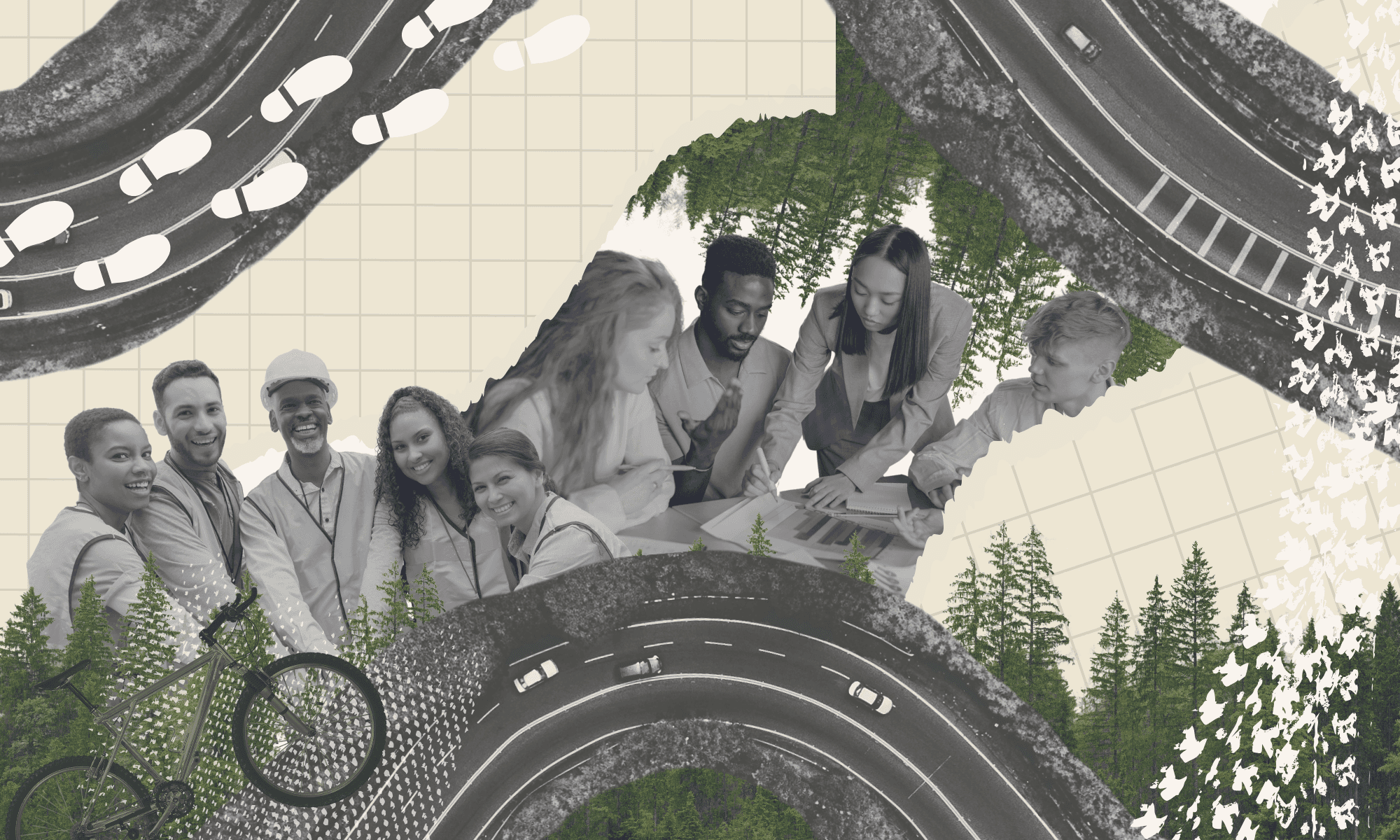
The Community Connectors team built a community-government-university partnership that integrated the strengths of diverse partners through transformative, multi-directional, engagement, and relationships. Community partners have deep community ties and are directly accountable to their neighborhoods. Governmental partners are committed to creating new systems of engagement, and university partners are committed to providing technical assistance across multiple disciplines.
The Community Connectors team conducted studies on road speed, traffic noise, and air pollution in both the Merrick-Moore and Bragton neighborhoods. These studies found that:
Speeding is observed along most major roads in both neighborhoods, and is particularly high near the Bragtown Branch Library and on Cheek Road.
Noise levels in both neighborhoods averaged above 70 dB during the study periods. Vehicular noise contributes heavily to noise pollution and can result in adverse health impacts.
High levels of particulate matter were observed in the Merrick-Moore neighborhood, especially in the early morning.
Quick-build solutions have been proposed near Merrick-Moore elementary school to address high traffic concerns and increase safety in the area. These included installing speed cushions or speed bumps, creating highly visible crosswalks, and building pedestrian refugee islands on Cheek Road.
The

Core Team — Merrick-Moore Community Development Corporation, Bragtown Community Association & UNC-Chapel Hill
Partners — City of Durham NC & Durham County
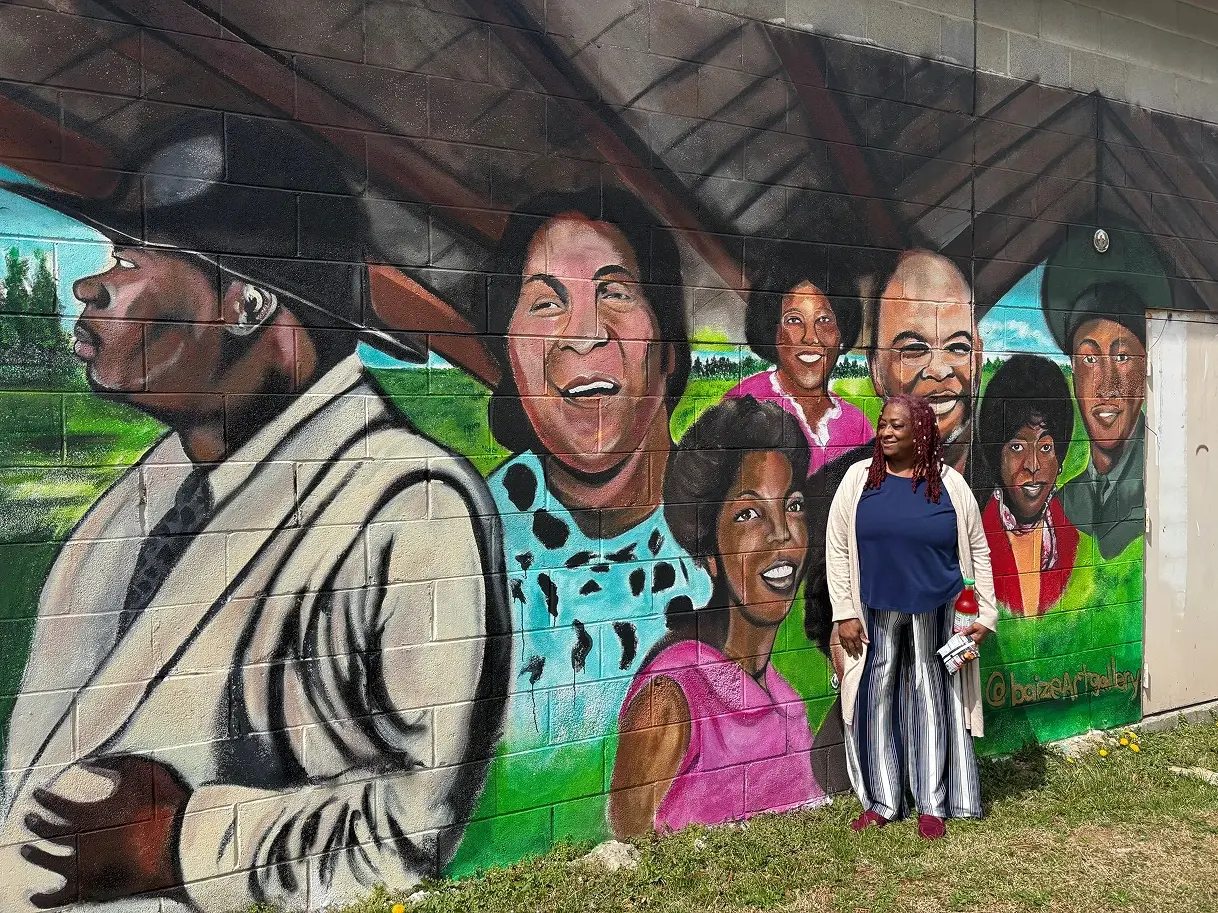
Vanessa Mason-Evans, Chair of the Bragtown Community Association, with a mural depicting her family lineage

School buses, fast-moving traffic, and pedestrians are forced to share the road without sidewalks

Bonita Green, Executive Director of Merrick-Moore Community Development Corporation

Railroad tracks that once carried formerly enslaved people to Bragtown, where they settled

Bragtown mural symbolizes bondage, freedom, and the Sankofa bird, looking to the past to guide the future

Bus stop in Bragtown with no seating, shade, or safe place to wait

Sidewalk ends before reaching the local elementary school
Scroll For More ➛
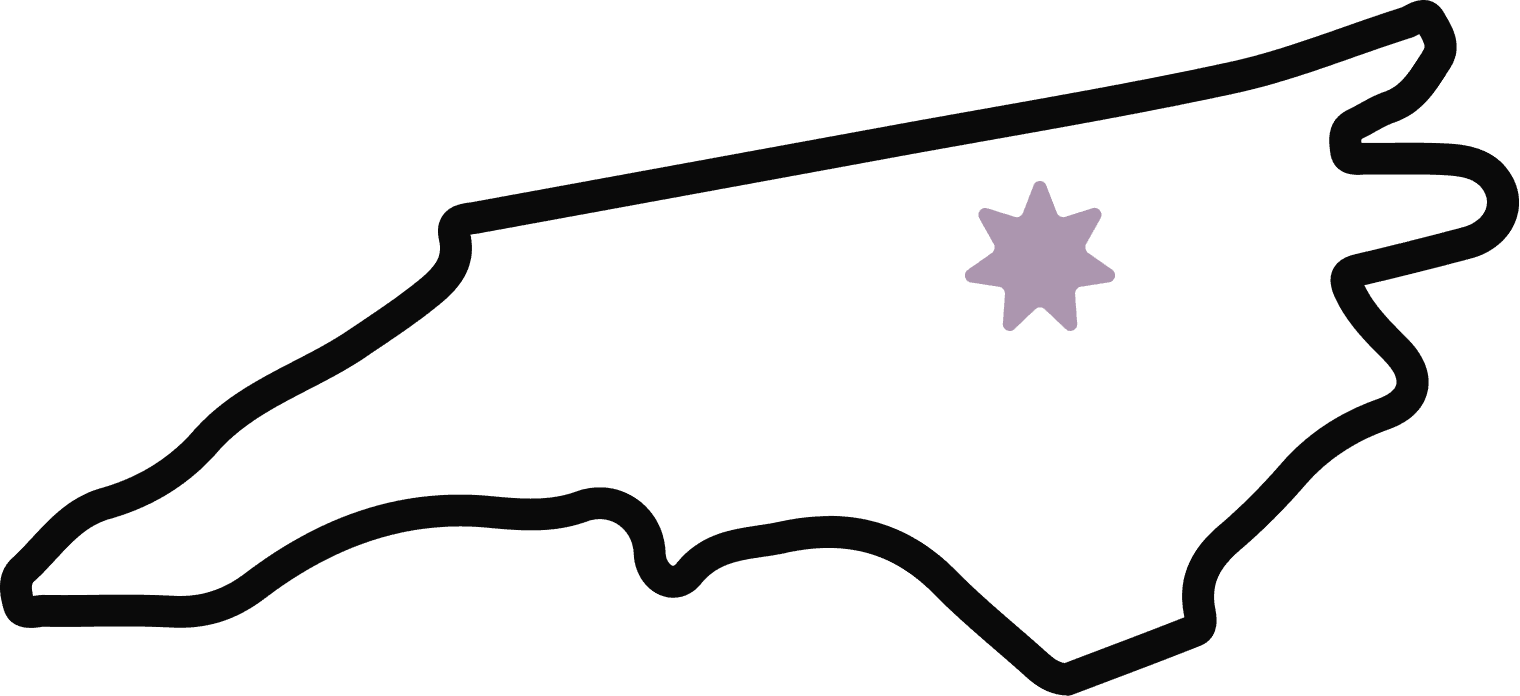
Durham, North Carolina
This city's local history offers critical context for the current circumstances and ongoing work to improve community conditions.
The following mobility legacies, organized according to mobility patterns that are prevalent across the United States, point to harmful policies and decisions, and subsequently, opportunities for repair and reconnection. They do not provide an exhaustive history of the city.