Do you want to make your own City Snapshot?
The Setting Your Stars Worksheet can get you started. See page 49 of The Journey Forward.
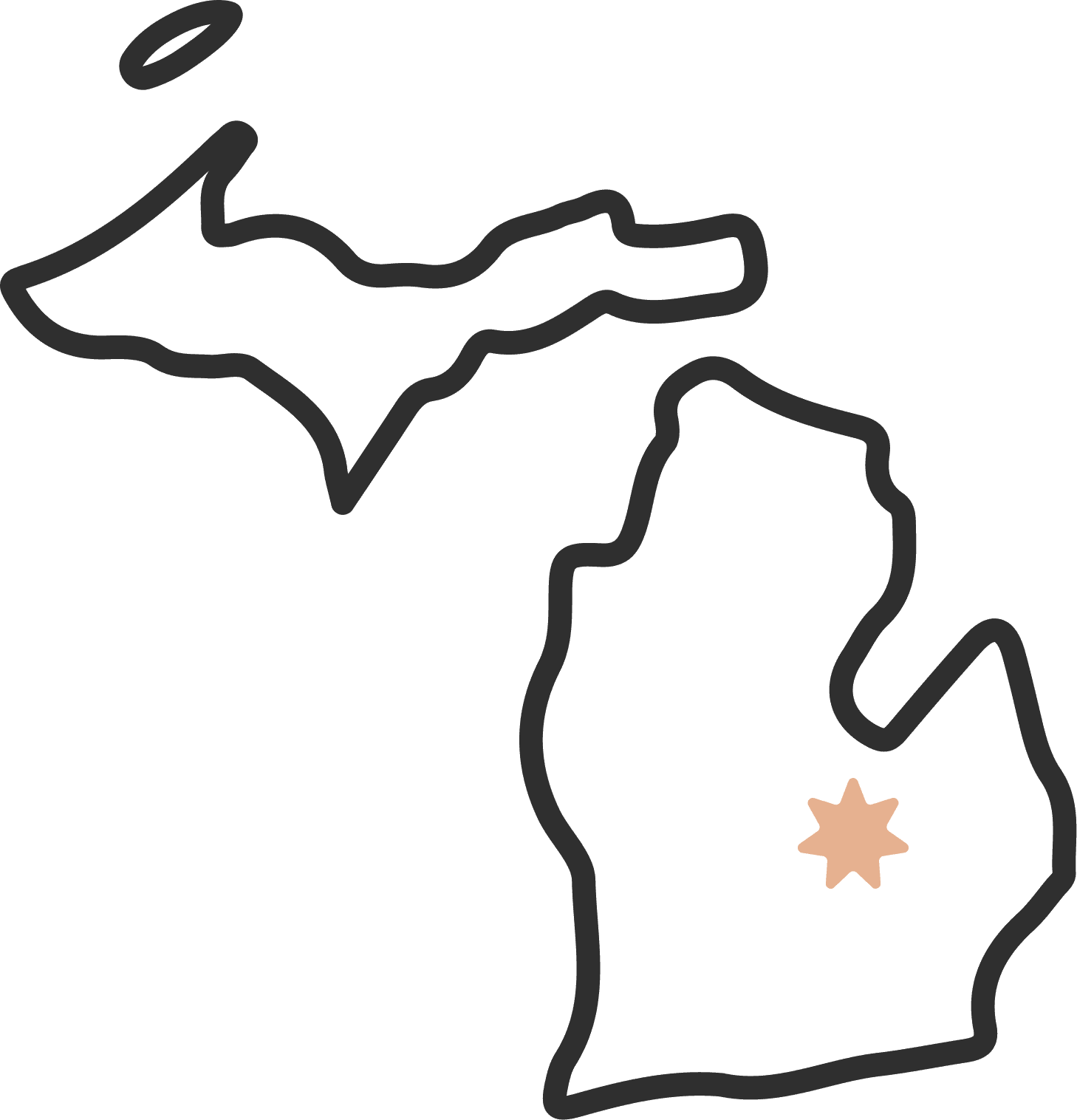

South Saginaw and East Side After Crisis
The Community Connectors project in Flint, MI, focused on improving conditions in the South Saginaw and East Side neighborhoods by facilitating the development of community-led neighborhood plans.


The

Flint is an urban community with a rich industrial history and a diverse population. The city is predominantly Black, with 56.3% of residents identifying as Black [1]. The Community Connectors project is focused on neighborhoods throughout Flint’s I-475 Corridor, but the work has been inspired by the efforts of two distinct neighborhoods – the South Saginaw neighborhood and the historic East Side.
The South Saginaw Neighborhood is home to approximately 8,000 residents, predominantly Black and Latinx [2]. Median household income is below the state average, with a significant percentage of households living below the poverty line. The community is urban, with a mix of residential, commercial, and industrial areas. The neighborhood features small, aging homes, closed businesses, and abandoned properties. It also includes beautiful water areas, Thread Lake and Thread Creek, which are underutilized due to limited access. The International Academy of Flint, a well-regarded school serving diverse students from across the city, is a vital educational center. However, the dangerous infrastructure, particularly the expressway, poses barriers to safe access for many students and residents.
The East Side neighborhood is a historically vibrant and culturally rich urban community that is home to approximately 6,500 residents [3]. Residents are predominantly Latinx, with a history of immigrants working in the nearby General Motors factory. Income levels are below the state average, with disparities exacerbated by the construction of the divisive infrastructure. The East Side once featured a bustling business district with a wide range of Latin-American shops, restaurants, and community centers. However, many buildings were demolished or abandoned following the construction of the expressway. Lewis Street, the main street in the neighborhood, used to be a hub of cultural activity and economic vitality. Reconnecting this area will help revive the community's cultural identity and promote economic opportunities.
The

In 1973, Interstate 475 bisected many communities in Flint and in doing so, prioritized efficient movement of cars and freight over community connections. The divisive infrastructure led to disinvestment, demolition of properties, and a decline in quality of life for residents.
The

The Community Connectors project focused on repairing and reconnecting the South Saginaw and East Side neighborhoods with the goal of creating thriving, connected, and prosperous communities that foster a sense of belonging and well-being for all residents. The team conducted public engagement and collected data, building local capacity to refine the broad community vision for improved connectivity, equitable reinvestment, and the reintroduction of public spaces to foster interaction and cultural identity. The project brought together organizations and leaders from both neighborhoods, along with residents and government, to rebuild trust and work toward community-defined neighborhood plans. The project aimed to update two neighborhood plans by taking a holistic approach to community engagement that prioritized healing, parks, accessible safe streets, housing, community wealth building, and resident power.

The

LEAD — Crim Fitness Foundation
Central Park Neighborhood Association

Mobility Legacies
Flint, Michigan
This city's local history offers critical context for the current circumstances and ongoing work to improve community conditions.
The following mobility legacies, organized according to mobility patterns that are prevalent across the United States, point to harmful policies and decisions, and subsequently, opportunities for repair and reconnection. They do not provide an exhaustive history of the city.







Ecological and Environmental Impacts