Do you want to make your own City Snapshot?
The Setting Your Stars Worksheet can get you started. See page 49 of The Journey Forward.


Reconstructing Bailey Avenue
The Community Connectors project in Buffalo, NY focused on redressing long-standing inequities and barriers to opportunity by reconstructing Bailey Avenue, implementing a Battery Electric Bus Rapid Transit system, and making related land-use improvements.


The

Buffalo’s East Side has significant historic resources, community-based assets, walkable thoroughfares, education and training resources, and access to public transit. The area is home to 42 percent of the city’s population (approximately 100,000 people) and 78 percent of those are people of color [1]
Bailey Avenue is one of the city and region’s key north-south commercial corridors. It plays a critical and outsized role in the vitality, livability, and character of Buffalo's East Side. The Bailey Avenue corridor is also home to nearly half of the East Side’s residents [2]. The neighborhoods immediately surrounding Bailey Avenue are primarily residential and 54 percent of residents identify as African American or Black [3].
Along Bailey Avenue, varying land uses coexist and contribute to its unique character. The corridor includes private and public land ownership (e.g., City of Buffalo, SUNY Buffalo, U.S. Veterans Affairs Hospital), businesses, vacant land, recreational amenities, and warehouses. Many small employers make up the retail environment that occupies most of Bailey’s street frontage [4].

The

The Bailey Avenue corridor is one of the most densely populated, low-income, zero-or one-car household areas in western New York, but traffic and throughput have been prioritized over the needs of the local community [5].
The

The Buffalo Community Connectors’ project focused on redressing long-standing inequities and barriers to opportunity through the reconstruction of Bailey Avenue in Buffalo, NY, the implementation of a Battery Electric Bus Rapid Transit (BEBRT) system, and related land-use improvements. Through ongoing Roundtable convenings and advocacy, the team centered the experiences of people who have been historically excluded from investment and confronted barriers, such as concentrated poverty and structural racism. Funding was used to strengthen existing and on-going participation by community-based organizations and residents in NFTA’s planning initiatives, especially BEBRT along Bailey Ave.

The

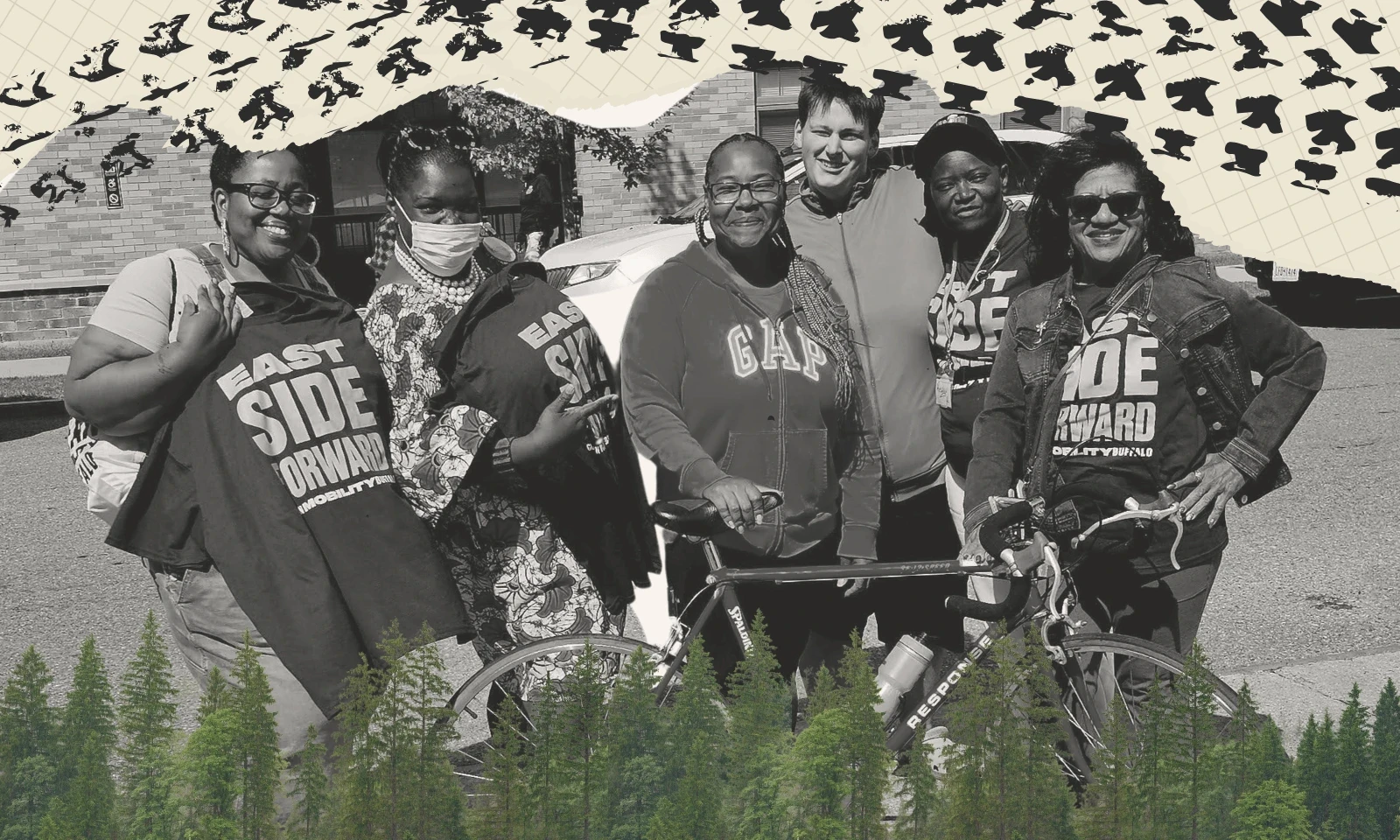
The Buffalo Community Connectors team included representation from the following organizations:

Mobility Legacies
Buffalo, New York
This city's local history offers critical context for the current circumstances and ongoing work to improve community conditions.
The following mobility legacies, organized according to mobility patterns that are prevalent across the United States, point to harmful policies and decisions, and subsequently, opportunities for repair and reconnection. They do not provide an exhaustive history of the city.